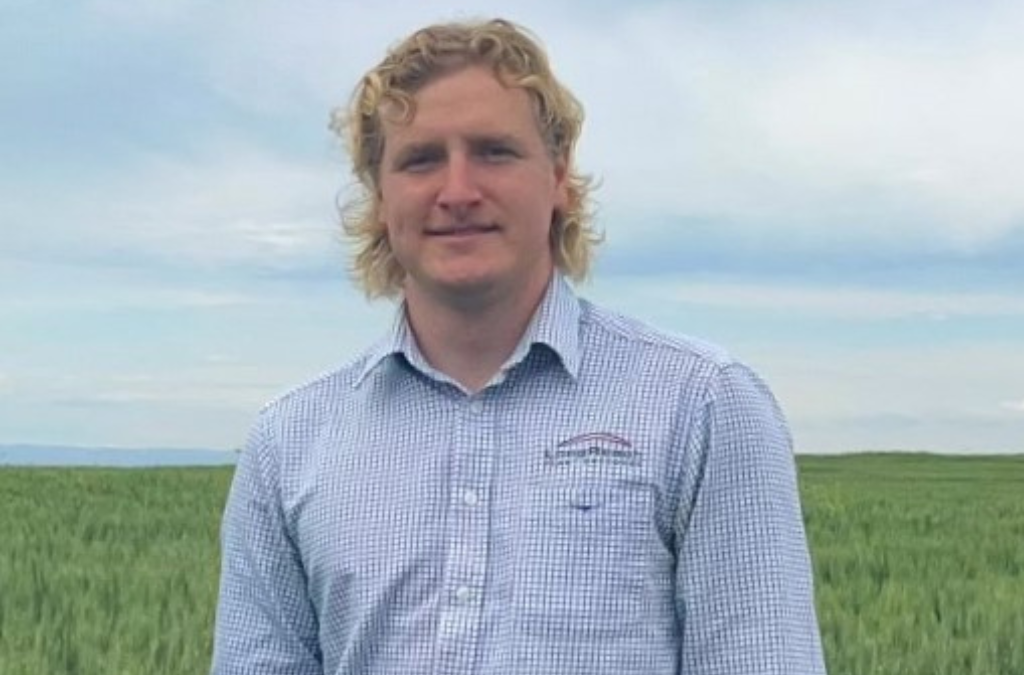
I studied a Bachelor of Science (Biotechnology) with Honours Class 1 at Flinders University in Adelaide. I conducted my Honours project researching the genetic variation of oxidative stress response in wheat and association with yield stability. My experience working in a number of roles in the agriculture industry have allowed me to see the impact of plant breeding efforts and the opportunities afforded in applied biotechnology research. I have gained valuable industry experience working in a technical role for Australian wheat breeding company; LongReach Plant Breeders over the last 3 years. I have undertaken a PhD within the ARC Training Centre for Predictive Breeding to further develop my skills in quantitative genetics and genomics, to contribute to my goal of becoming a plant breeder.
Genomic Selection (GS) has emerged as a major tool to increase genetic gain in plant and animal breeding programs by enabling early selection, reduced breeding cycle time and improved trait performance. GS works by calculating genome-wide marker effects corresponding to phenotypic data for a given trait within a reference population and uses this relationship to predict the performance of an untested individual. The predictions can be used to discard germplasm unlikely to be commercially competitive, and fast track strategies can be applied resulting in varieties being released to growers much earlier than using traditional methods. The GS predictions are typically known as breeding values and are also used to inform parent selection and crossing strategies. The concepts of general and specific combining ability are factors resulting in variable and unpredicted levels of transgressive segregation in different crosses. This is a weakness in the current paradigm applied in GS and is the opportunity for this project to make an improvement. This project seeks to predict these outcomes of progeny population yield mean and variance to inform breeders’ decision making about parent and cross-combination selections through advanced simulation models, improving genetic gain while reducing time/cost associated with developing new varieties.
Plant breeding provides a combination of interesting research fields, and an effective researcher or breeder needs to understand and deploy a range of tools in biotechnology and genetics. The current availability and resolution of large genomic datasets and development of advanced computational models enables new opportunities for agricultural productivity. Genomic prediction has provided improved genetic gain within breeding programs, and with the expertise of my supervisory team at UQ, I hope to contribute with novel predictive breeding approaches.
The goal of my project is to develop predictive models to optimize parent selection and crossing strategies in breeding programs. The project is designed to encapsulate the necessary skills required for industry-leading genomic breeding, and I look forward to developing my understanding of genotype-by-environment interaction modelling, genomic prediction approaches and advanced simulation models. A major benefit of my project’s collaboration with LongReach Plant Breeders is the access to historic genotypic and phenotypic data to build the predictive models, and compare genetic gain and breeding efficiency of a simulation-guided crossing strategy with conventional approaches and validate prediction accuracy within a commercial scale breeding platform.